Military regime in crisis
Since the 2021 military coup, Myanmar has witnessed revolutionary mass struggles. Millions took to the streets to oppose the junta, but their efforts fell short of toppling the regime. In the Aftermath, armed guerrilla warfare began to escalate across the country.
On October 27, 2023, the first phase of “Operation 1027,” launched by the Northern Alliance, inflicted significant losses on military positions in Laukkai, an important city in the northern Shan state. The second wave of the operation resumed in 2024, delivering even heavier blows to the junta. The military suffered a major defeat with the fall of Lashio—a strategically vital city near the Chinese border—and the loss of the Northeastern Regional Military Command headquarters to the Myanmar National Democratic Alliance Army (MNDAA). This marked the most devastating loss yet for the regime, prompting its leadership to urgently appeal to Beijing for support.
In December 2024, the junta also lost the Western Regional Command headquarters in Rakhine State. Apart from three townships, nearly the entire state came under the control of the Arakan Army (AA). This region holds critical importance for China due to major infrastructure investments, including the Kyauk Phyu Special Economic Zone, oil and gas pipelines linking the Bay of Bengal to China’s Yunnan province, and a deep-sea port project that would grant China direct access to the Indian Ocean. Chinese state enterprise currently holds a 70 percent stake of the port on a 50 year lease that could be extended to 75 years.
Other ethnic armed groups, including the Ta’ang National Liberation Army (TNLA) and the Kachin Independence Army (KIA), have launched successful offensives in Shan and Kachin States, capturing one township after another. TNLA and its allies have even advanced to Naung Cho, a town not far from Mandalay, raising the possibility of Myanmar’s second-largest city falling to resistance forces. The regime appears increasingly shaken and desperate.
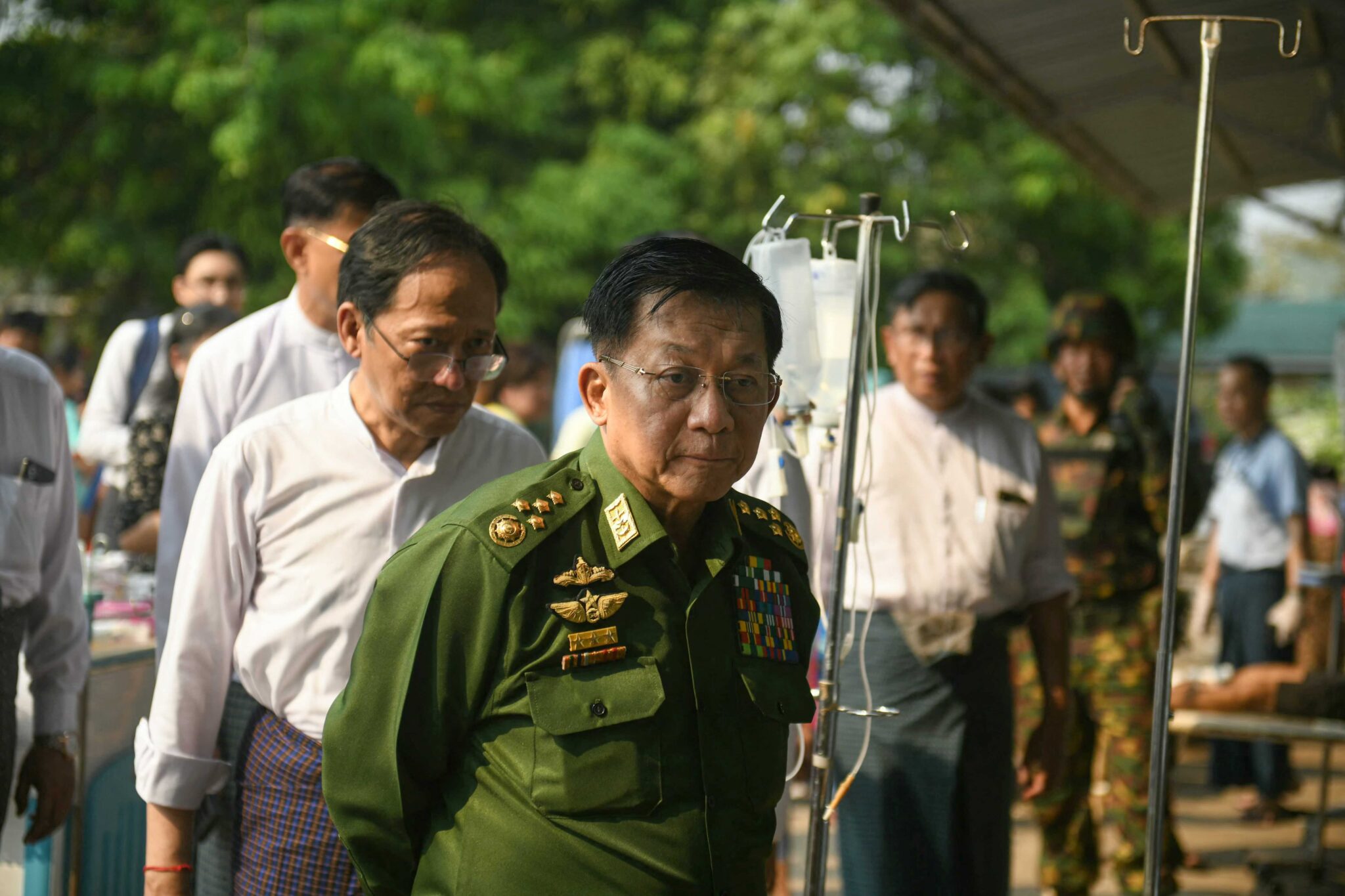
Rampant corruption within the military, especially among the top brass, has further demoralized rank-and-file soldiers, who feel abandoned by their leaders. While the Arakan Army seized the Western Command, the Junta regime’s top brass, Min Aung Hlaing and his generals, were seen attending the closing ceremony of a national sports festival in Naypyidaw—an act that angered
even staunch regime supporters. The festival appeared to be a propaganda effort to stir nationalism and divert public attention from the regime’s deepening crisis.
Meanwhile, the International Criminal Court (ICC) has been seeking to issue an arrest warrant for Min Aung Hlaing over crimes against humanity related to the 2017 genocide of the Rohingya in Rakhine State. This legal pressure further undermines the morale of junta forces, already reeling from battlefield losses. In the face of mounting internal turmoil, Min Aung Hlaing reshuffled his inner circle in late 2024, appointing his loyalist Lieutenant General Kyaw Swar Lin as Chief of the General Staff.
Lacking a genuine social base, the regime has resorted to brutal tactics, including indiscriminate airstrikes targeting civilians. At the time of writing, junta air forces bombed a school in Depayin Township, Sagaing Region—a horrific attack that claimed the lives of dozens of schoolchildren and teachers. Such acts of terror underscore the regime’s desperation, yet they are insufficient to ensure its survival. Increasingly, the junta depends on the crucial support of Chinese and Russian imperial powers to maintain its grip on power.
Chinese regime props up Myanmar junta
Following the fall of Lashio, Beijing swiftly dispatched top officials—Foreign Minister Wang Yi and Deng Xijun, the Chinese Foreign Ministry’s Special Envoy for Asian Affairs—to Naypyidaw. Their visit sparked speculation about China’s stance, with some, including Yun Sun writing in Nikkei Asia, suggesting that the Chinese Communist Party (CCP) might be permanently shifting its support toward the resistance forces. However, subsequent developments made it clear that this was not the case.
Despite frequent claims of neutrality and non-interference in Myanmar’s internal affairs, China’s actions have consistently contradicted its rhetoric. Leaked meeting minutes revealed the extent of China’s involvement. On August 27, 2024, a confidential meeting was held in Pu’er, in China’s Yunnan Province, between Deng Xijun and leaders of the United Wa State Army. According to BBC Burmese, citing sources close to the Wa group, the meeting did take place and the leaked information appears largely accurate.
Key Revelations from the Leaked Document
Several critical points emerged from the leaked document:
1. Chinese Opposition to Extended Rebel Gains: China strongly opposed the MNDAA and its allies extending Operation 1027, particularly their seizure of Lashio. Beijing urged the groups to withdraw, viewing the takeover as a destabilizing move.
2. The document reveals that China considers the Myanmar military to be the founder of the modern state and believes that neither the National Unity Government (NUG) nor Aung San Suu Kyi’s National League for Democracy (NLD) can replace it, an assertion described as “historically determined” [sic]. It is ironic that a representative of a self-proclaimed Communist state expressed such a fatalist view of history. It also reflects Beijing’s suspicion that the NUG and People’s Defense Forces (PDFs) are U.S.-aligned proxies, posing a threat to China’s strategic interests.
3. Red Line in Lashio and Strategic Concerns: MNDAA’s occupation of Lashio was described as crossing a red line for China, endangering bilateral relations and threatening key Belt and Road Initiative (BRI) projects in the region. The document also suggests this event could open the door for Western intervention.
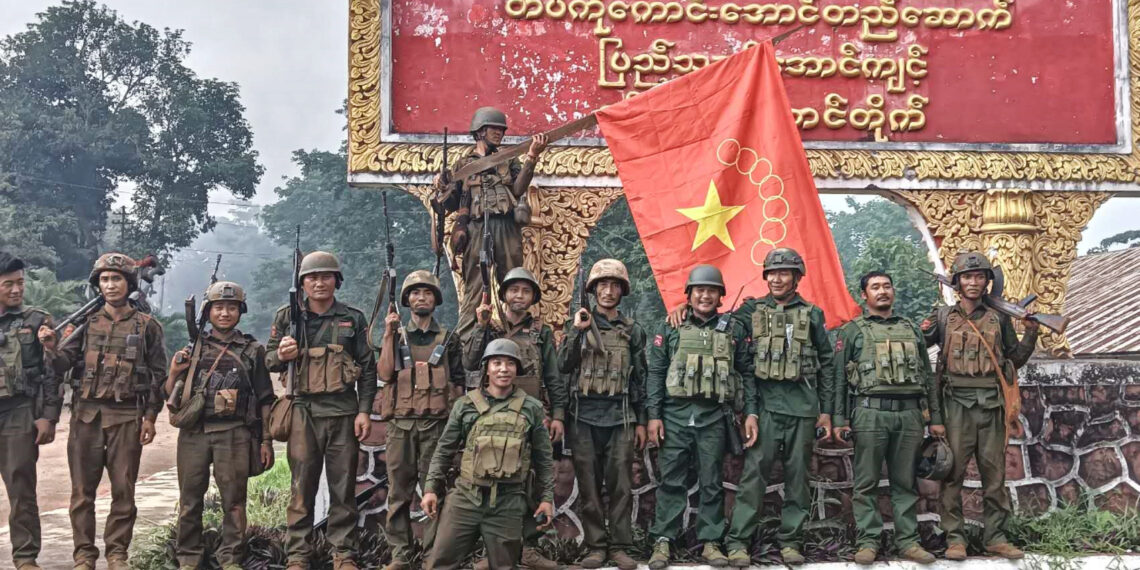
While Beijing appeared to tacitly support the initial phase of Operation 1027, particularly as it helped dismantle transnational telecom and internet scam syndicates in the border areas, it never intended to back a revolutionary movement. The support was pragmatic: a way to pressure the increasingly unreliable junta and maintain leverage. The fall of Lashio, however, signaled a level of instability China was unwilling to tolerate.
The Myanmar junta relied heavily on a lifeline provided by Beijing, which pressured the Kokang armed forces to withdraw from Lashio. Simultaneously, the military regime launched daily airstrikes and bombings on the city, reducing much of it to rubble.
China also imposed a blockade on the Kokang region, cutting off essential supplies such as electricity, water, internet access, fuel, medicine, rice, and human supplies as well. In addition, the United Wa State Army was strictly prohibited from supplying arms and ammunition to resistance groups, including the MNDAA and TNLA.
The general public remained unaware of this imperialist blockade until October. Thus, many were surprised when the MNDAA issued a statement in early September 2024, declaring that they would not engage in military or political cooperation with pro-Western forces, particularly the National Unity Government (NUG). The MNDAA also affirmed that they would refrain from launching offensives to seize Taunggyi, the capital of Shan State, and Mandalay, Myanmar’s second-largest industrial center.
Eventually, under mounting pressure, the MNDAA began withdrawing from Lashio in April 2025, following negotiations with the junta held in China’s Yunnan province. It has become evident that Beijing is now exerting significant pressure on other members of the Northern Alliance, particularly the TNLA. Backed by China, the junta has demanded that the TNLA withdraw from all territories seized during the Operation 1027 offensive. So far, the TNLA has refused to comply, and talks have collapsed. However, it remains uncertain whether they can withstand sustained Chinese pressure in the long term.
A continuation of domestic policy
The military’s coup in Myanmar in 2021 was not aligned with Beijing’s interests, nor does China believe that the junta can sustain its rule by force alone. This explains why it has pressured the regime to hold elections in 2025, which is truly spectacular given that China itself does not hold real elections. Yet, at the same time, China is sanctioning the northern resistance forces—those very groups that came close to toppling the junta. Why this contradiction?
Some leftists and pro-China analysts, such as a leading member of the Communist Party of Burma (CPB) in a BBC interview, argue that diplomatic relations do not equate to political endorsement. However, this distinction becomes increasingly hard to defend—especially when China continues to supply the junta with military jets. The claim that these arms deals are based on prior agreements and do not reflect ongoing support does not withstand serious scrutiny.
While parts of the so-called “left” concede that China backs authoritarian regimes like Myanmar’s junta, they often ignore China’s fundamentally capitalist structure. Their argument is that the Chinese Communist Party (CCP), despite its assertive foreign policy, is still implementing “socialism with Chinese characteristics” in the interest of the people. According to this view, China’s support for the junta is merely a flawed foreign policy—not a reflection of its internal economic system. From this logic, they conclude that all that’s needed is to push for a “patriotic line”—and leave it at that.
Such thinking fails to recognize the essential fact that Chinese capitalism has evolved into monopoly capitalism, i.e. imperialism. This is why Chinese foreign policy in countries like Myanmar, Pakistan, Sri Lanka, and South Africa consistently advances imperialist objectives. Contrary to the claims of pro-CCP Stalinists, the Belt and Road Initiative (BRI) is not a benign infrastructure program, but an imperialist project driven by the interests of China’s ruling class.
As township after township fell to the Arakan Army in Rakhine State, China moved urgently to protect its strategic interests in the region, aware that it could no longer rely on the Myanmar military. Despite a heavy presence of navy forces and infantry battalions around Kyaukphyu—a key port town—China established a joint-venture security company with the junta to protect its projects and personnel in the region. In return, the junta received much-needed support from Beijing. Junta leader Min Aung Hlaing’s repeated pledges to hold elections by the end of 2025 are widely seen as an effort to placate China.
At this point, debating whether China is capitalist has become tiresome—it clearly is. The Chinese economy now suffers from an organic crisis of overproduction, much like other capitalist systems. To navigate this crisis, the CCP has employed the same capitalist tools as its
global counterparts. Class contradictions within Chinese society are sharpening, with youth unemployment reaching alarming levels.
In this context, the Chinese ruling class has ample reason to fear the revolutionary spark spreading into its own borders. The CCP does not oppose regime change in Myanmar simply out of ideological loyalty or fear of a pro-Western liberal government. As the past decade has shown, such governments have posed no serious threat to Chinese capital. What the CCP truly fears is the fall of a military regime through popular uprising—a scenario that could ignite revolutionary momentum in Myanmar and reverberate throughout the region, including within China itself.
From a Marxist perspective, foreign policy is inseparable from domestic class dynamics. China’s support for the junta is not a foreign policy aberration, but a reflection of its internal capitalist contradictions. Historically, the CCP has supported Myanmar’s military regimes. But this time, it may be backing the wrong horse.
Balancing between imperialist entrants
It was an open secret that the 1027 operations could not have achieved overwhelming success in such a short span of time without support from the Chinese Communist Party (CCP) regime. This move was not only intended to pressure the increasingly unreliable junta, but also to counter the growing influence of other imperialist powers—primarily Russia, and to a lesser extent, India.
As mentioned earlier, the military takeover did not align with Beijing’s preference for a stable regime in its backyard. However, the coup leader made a serious miscalculation driven by narrow self-interest. As a result, he increasingly turned to Russia for support after the coup.
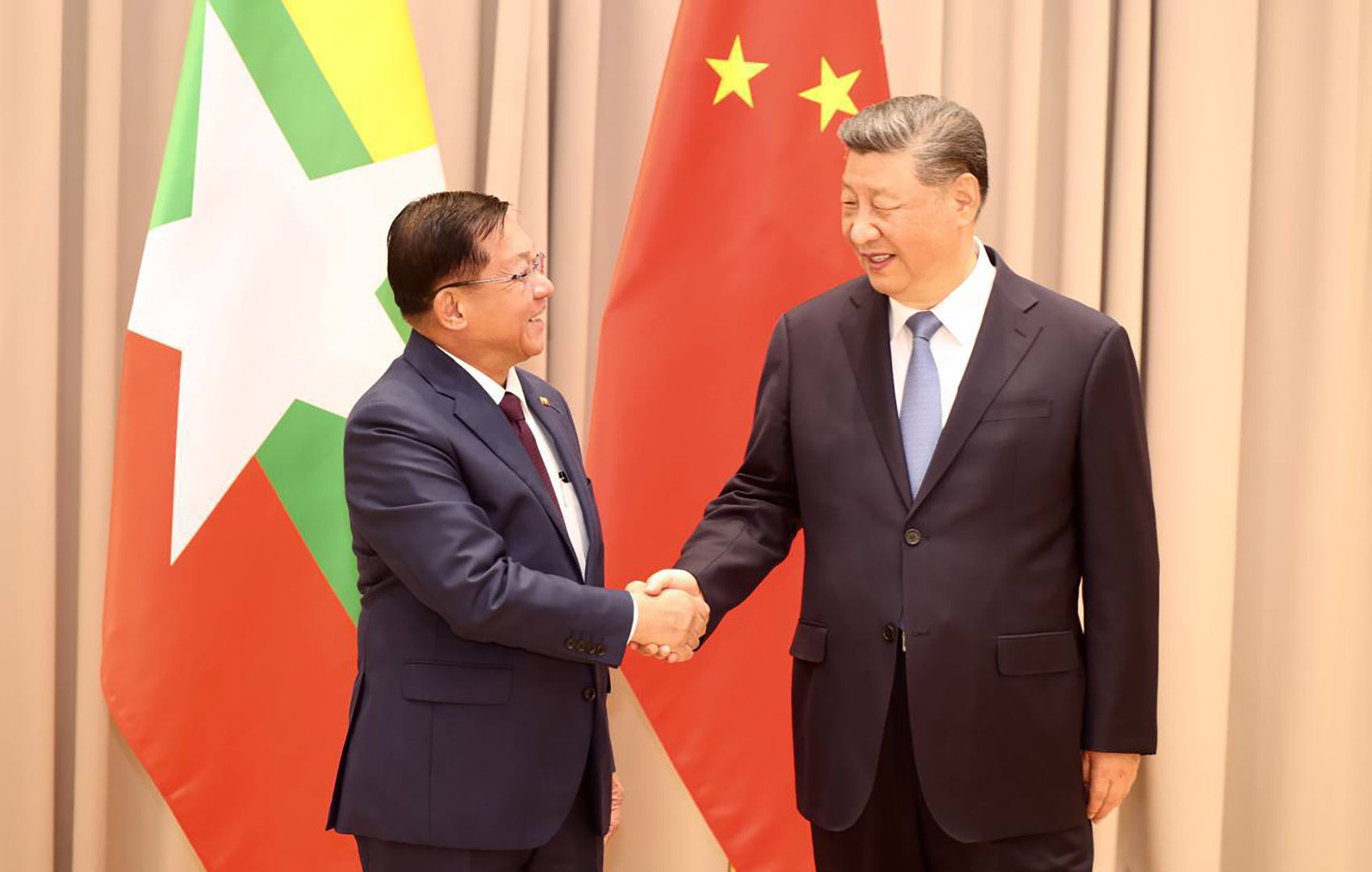
During Min Aung Hlaing’s fourth visit to Russia in 2025, President Putin praised a 40% increase in bilateral trade over the past year. In a symbolic gesture, the junta leader presented six elephants to Putin, reportedly in exchange for six Russian fighter jets destined for Myanmar. Additionally, both sides signed an agreement to construct a small-scale nuclear power plant in Myanmar, which would alleviate the longstanding energy shortage in the country that draws much ire from the masses. The Myanmar military has also been deepening its ties with the Russian armed forces, including close cooperation between their respective air forces.
Following the 1988 uprising, China became the primary supplier of military weapons to the Myanmar regime. However, in an effort to reduce its overwhelming dependence on China, the military government began diversifying its arms sources by acquiring Russian-made MiG-29 Fulcrum multi-role jet fighters, Mi-35 attack helicopters, and Mi-17 transport helicopters—all of which have been extensively deployed by the junta’s air force in the ongoing civil war. Since the 2021 coup, Russia has overtaken China as the largest provider of military support to the junta. According to the Swedish think tank SIPRI, Russia supplied Myanmar with military equipment worth US$276 million in the year following the coup, compared to US$156 million from China.
In addition to military hardware support, Russia is also planning to invest in the long-delayed Dawei project on the Andaman Sea. This deep-sea port has the potential to connect the Indian and Pacific Oceans, offering an alternative transport route that bypasses the strategic Malacca Strait chokepoint. In a recent memorandum on the port, signed in February 2025, Russia also tacitly promised to build an oil refinery, which Myanmar desperately needs as it has long been frustrated by being a crude oil producer without being able to refine them for domestic use.
This move comes amid intensifying efforts by both China and India to advance their respective strategic infrastructure projects in Myanmar. On one hand, China is pushing forward with the development of the Kyaukphyu Special Economic Zone (SEZ) and deep-sea port in Rakhine State; on the other, India is backing the $484 million Kaladan Multi-Modal Transit Transport Project (KMTTP), centered in Sittwe, which is aimed at enhancing India’s regional influence in Southeast Asia. Out of the interests of Indian imperialism to compete for influence over Myanmar with China, recently, many India-based media outlets have repeatedly made unfounded claims that A proxy war between the US and China would imminently break out in Myanmar, in order to fan up anti-Chinese sentiments.
At the same time, this helps explain China’s “carrot and stick” approach toward the Myanmar junta — a strategy aimed at maintaining control while avoiding complete destabilization.
The absence of the West
Notably, nowhere in this picture is the presence of Western imperialism. For more than a decade, Western imperialism has been on a steady retreat from Myanmar and yielding way to China, and its last hope for a comprador agent Aung San Suu Kyi whom they once lionised, soon turned over to China as she went into government in 2016.
According to official figures, today only 3 countries of G10 make the top 10 FDI countries in Myanmar: the UK, Japan, and the Netherlands. Collectively they make up only 11.67 percent of FDI in Myanmar. The US’ share is only 0.62 percent. These are dwarfed by China (including Hong Kong)’s 34.23 percent. Of course, no Western countries are given control over vital Burmese infrastructures like China, Russia, and India at the present time.
This explains why, when the coup took place in 2021, the US Biden administration did very little in reply, while the EU only implemented some toothless sanctions. It is not that they no longer harbor imperialist ambitions over Myanmar. Rather, they are powerless to compete with Chinese dominance over the country.
This also explains why the pro-Western NUG representatives in Washington were only given a desk space by the Biden government inside a shared office and nothing more. What they have in abundance was neglect and apathy from US imperialism. As the NUG’s press aide Aye Chan Mon told the New York Times about the reception she often receives in Washington. “They don’t even know how to pronounce Myanmar, they think it’s Yemen.”
The isolationist Trump administration is even less interested in Myanmar. Trump even fired USAID officials and workers after they arrived in Myanmar to join the April earthquake relief efforts.
This sharply contrasts with the enormous amount of attention that the US paid to Myanmar under the Obama administration, when the US attempted to reassert Western influence over the country with might and main. All this came to a dead end soon after, and by now the West has largely conceded Myanmar to China.
The retreat of the West from Myanmar expresses a key feature of the present epoch of world capitalism: the relative decline of US imperialism. Communists enthusiastically welcome the exit of the West from Myanmar, though we’d prefer the masses give them a kick from the rear rather than letting them leave on their own accord. British and US imperialism bears the sole responsibility for placing Myanmar under the yoke of oppression, exploitation, and backwardness. Much of the chaos that reigns in the country has its origins in British colonial times.
However, as we have seen in recent developments, in the absence of a revolutionary socialist regime where the working class and the oppressed masses hold power, the retreat of the West does not automatically lead to anything better. What we have today is a deeply inept and corrupt military regime serving the interests of an equally craven national bourgeoisie. This ruling class is turning the country from the old imperialist powers into the hands of new ones: China, Russia, and India.
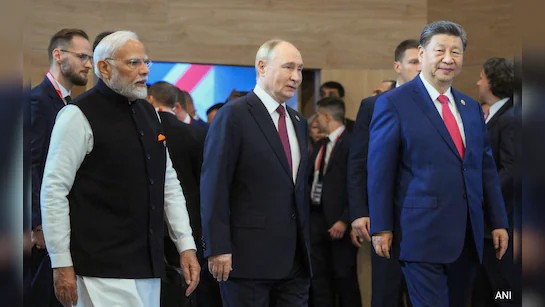
Nevertheless, as we explained above, China and Russia are not interested in the betterment of the Burmese masses, even if they are the chief rivals of the West on the world stage today. They are only interested in extracting profits on behalf of their own capitalist interests, which will involve the exploitation in the labor and resources of Myanmar.
Rather than placing hope in a “relatively benign” foreign power, Communists advocate for the Burmese masses to take power on their own, in solidarity with the Chinese, Russia, Indian, and all Southeast Asian workers as a part of the regional and international revolution. That is the only path out of the never-ending instability and backwardness.
The weakest link of Asian capitalism
Against the backdrop of imperialist meddling and the unspeakable atrocities committed by the military regime, the future of the Myanmar people may appear bleak. However, this is only part of the picture. The junta’s total dependence on foreign imperialist powers is not a sign of strength—it is a glaring symptom of its fragility. Far from possessing a stable foundation, the regime is propped up by external support and riddled with internal contradictions.
Min Aung Hlaing and co are only showing the masses that they are willing to sell off their countries to the highest bidders in order to preserve their own positions. The deepening crisis of capitalism, coupled with the growing hatred and seething anger of the masses, has created the conditions for a revolutionary explosion. Sooner or later, these combustible forces will converge into a mass uprising.
Myanmar’s capitalist system is arguably the weakest link in the chain of Asian capitalism. As in Russia in 1917, it is often at the weakest link that capitalism breaks. With any significant economic recovery, the working class will begin to reassert itself and re-enter the historical stage as a decisive force.
Once mobilized, the organized power of the proletariat is unstoppable. Leading the oppressed masses of Myanmar’s diverse ethnic groups, the working class will not settle for mere regime change. Instead, it will push forward to carry out the tasks of the socialist revolution in Myanmar and beyond.
Thurein Mon